As Arctic sea ice continues to melt at a rate of 13.1% per decade (according to data from the U.S. National Snow and Ice Data Center, NSIDC), the living space for species such as polar bears and Arctic foxes is rapidly shrinking. The ecological impact of climate change is no longer a distant warning, but an urgent, real-world challenge—one that calls for solutions that combine technological strength with a sense of responsibility.
Cross-sector Collaboration: Tongwei + WWF
In China’s ongoing push to achieve its dual-carbon goals through renewable energy, Tongwei has positioned itself as a company committed to both solar PV technology and ecological responsibility. The company recently entered into a strategic partnership with the World Wide Fund for Nature (WWF), becoming:
the first private Chinese enterprise to join WWF’s Arctic conservation program, and the first PV manufacturer to enter a long-term climate and energy cooperation with WWF. This sets a new benchmark for the industry.
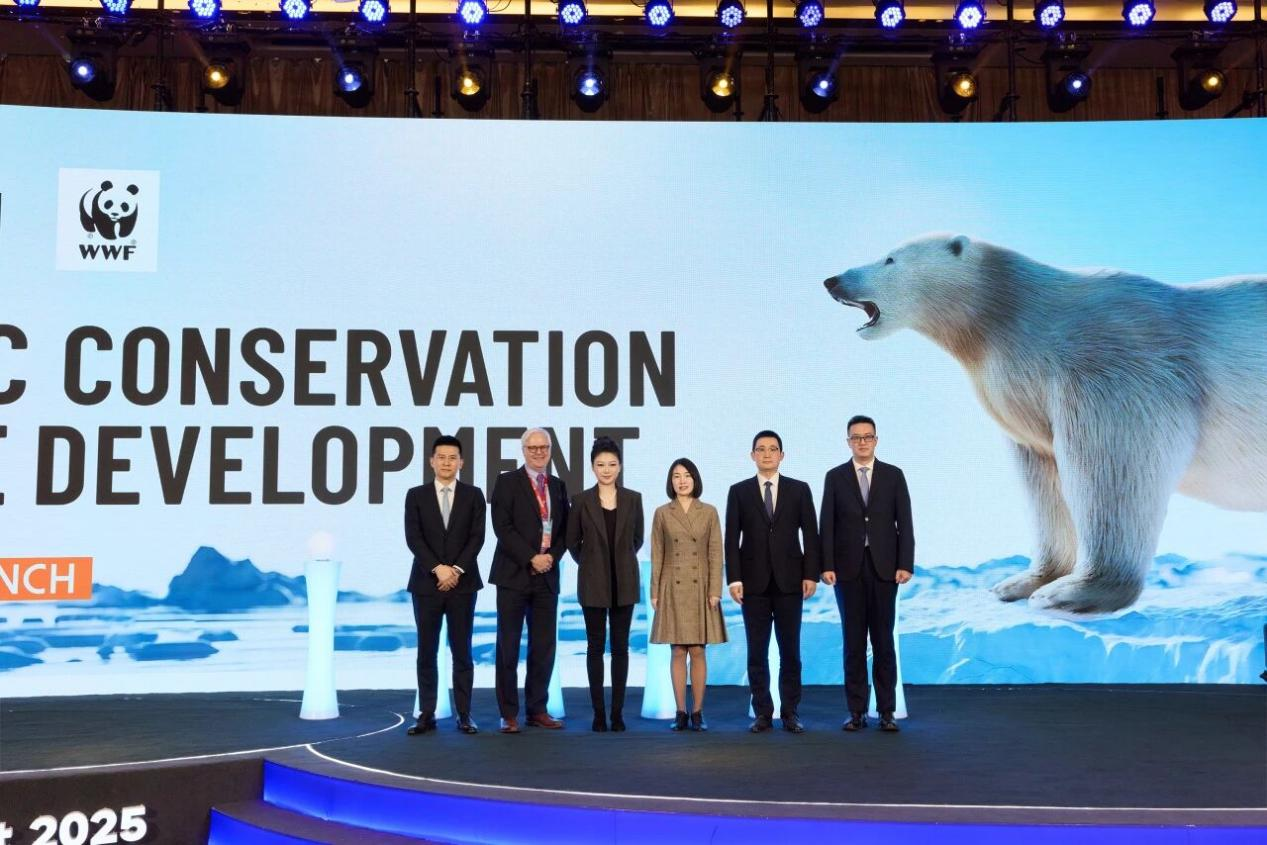
Image source: Tongwei Co., Ltd.
This groundbreaking collaboration is not only a key step in Tongwei’s global strategy to address ecological challenges, but also an important example of China’s green forces participating in international environmental governance. By integrating WWF’s ecological research expertise with Tongwei’s PV industrial capabilities, the partnership aims to explore replicable models for synergistic development between renewable energy and ecological protection.
Responsibility in Action: World-class PV Manufacturing Strength
Tongwei’s commitment to ecological protection stems from more than 40 years of deep and smart industrial expertise. On the manufacturing side, Tongwei's Meishan Cell Factory No. 4—recognized as the world’s first “Lighthouse Factory” in the PV cell sector—has established a full-process “one cell, one code” traceability system. With AI and big-data applications, the plant achieves lower lifecycle energy consumption and higher operational efficiency, providing verifiable, high-quality assurance for high-performance modules.
On the product side, Tongwei’s TNC 2.0 modules deliver outstanding performance under extreme conditions, with outdoor yields significantly higher than industry averages. The next-generation TNC 3.0 modules further achieve breakthroughs in conversion efficiency, system performance, and lifetime value—emerging as powerful “energy tools” for ecological conservation.
At the cooperation launch event, Liu Shuqi, Chairwoman and CEO of Tongwei Co., stated that advancing the deep integration of green energy and ecological protection is not only a long-term undertaking, but also a solemn commitment to the future.
From full lifecycle carbon-footprint certification to ongoing smart manufacturing innovation, Tongwei is transforming its green manufacturing strength into tangible environmental action.
Technical Validation: From the Plateau to the Arctic
Supported by robust manufacturing capabilities, Tongwei has already tested its products in extreme conditions on the Tibetan Plateau—and is now extending these efforts to the Arctic.
At altitudes over 4,500 meters, Tongwei’s off-grid PV systems have brought clean power to the “Roof of the World.” Since 2018, the company has continuously donated off-grid systems to the “Qinghai–Xizang Green Post Stations.” The TNC (TOPCon) series, with its high cold resistance and excellent reliability, supplies uninterrupted 24-hour electricity to stations such as the Sonam Dargry Protection Station in Hoh Xil and monitoring points in Sanjiangyuan, addressing the persistent issue of inadequate power supply in harsh environments.
Now, this experience is being extended to the Arctic. Tongwei’s partnership with WWF focuses on enhancing the resilience of Arctic ecosystems, jointly conducting environmental monitoring and supporting long-term research on multi-year sea ice distribution and trends. The collaboration also explores mechanisms for harmonious coexistence between humans and the Arctic ecosystem, and promotes sustainable involvement of local communities in conservation efforts.
To ensure effective implementation, the project will advance in phases: enhancing public awareness and engagement on climate issues through multi-channel communication, and leveraging Tongwei’s strong PV industrial capabilities to encourage broader stakeholder participation in systemic climate-change solutions and build societal consensus on biodiversity protection.
Regular evaluations will be conducted to develop reproducible and scalable models, expanding the project’s influence and attracting more cross-sector stakeholders to join in protecting the Arctic ecosystem and supporting global biodiversity.
Value Leadership: Injecting Momentum into Global Ecological Governance
The Tongwei–WWF partnership is not merely a collaboration between a corporation and a global NGO—it is a demonstration of China’s PV industry contributing to global ecological governance.
For the industry, Tongwei’s Lighthouse Factory standards and advanced TNC module technologies have created a unique pathway of “technology reserves – scientific collaboration – ecological protection.” By participating deeply in Arctic scientific research, Tongwei sets an example of how PV enterprises can assume ecological responsibilities.
For the world, Tongwei—representing China’s renewable-energy leadership—is offering an actionable “Chinese approach” to international environmental cooperation through its combination of technological support and global engagement.
More importantly, Tongwei is putting into practice the concept that “lucid waters and lush mountains are invaluable assets.” As the world confronts the dual crises of climate change and biodiversity loss, Tongwei is lowering the cost of green energy through technological innovation and working with partners worldwide to advance practical and effective conservation actions.