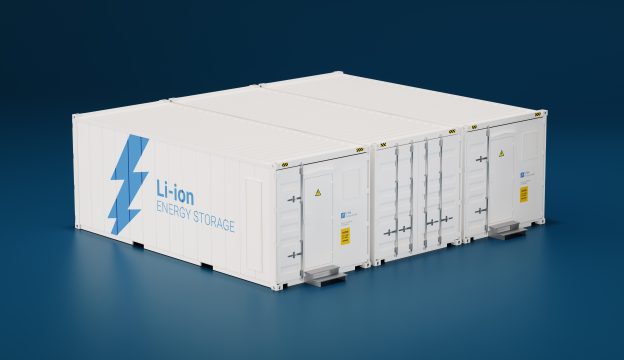
According to EnergyTrend, four enterprises including Deye, Sineng Electric, Narada Power and Zhuhai CosMX recently released their 2026 semi annual reports. These energy storage focused firms show divergent operating performances, presenting varied development trajectories such as robust profit growth, revenue growth without profit improvement, and substantial net losses.
Deye: First Half Revenue Surpasses RMB 10 Billion for the First Time
On August 26, Deye unveiled its 2026 semi annual report. In H1 2026, the company booked operating revenue of RMB 10.641 billion, a year on year increase of 92.23%; net profit attributable to parent shareholders hit RMB 2.717 billion, rising 78.53% YoY; non GAAP net profit stood at RMB 2.570 billion, up 75.81% YoY.
This marks the first time Deye has posted over RMB 10 billion in half year revenue. Explaining the revenue surge in its semi annual report, Deye attributed the growth mainly to rising market demand, rapid expansion of its energy storage battery pack business, and growing revenue from its inverter segment.
In H1 2026, inverters and energy storage battery packs together contributed more than 90% of total revenue, with energy storage battery pack revenue jumping 244.12% year on year. Breakdowns are as follows: Inverter business generated RMB 5.132 billion in revenue, accounting for 48.36% of main business revenue, up 94.09% YoY. Energy storage battery pack business brought in RMB 4.894 billion, representing 46.12% of main business revenue, a 244.12% YoY increase.
Deye shipped a total of 1.153 million inverters in H1 2026, including 570 300 residential energy storage inverters and 60 500 commercial industrial energy storage inverters.
According to Deye, the customer base and channel network built for its inverters among residential PV and energy storage installers have laid a solid sales foundation for the roll out of its energy storage battery packs. Existing customers who have purchased Deye inverters show relatively high acceptance and adoption rates for Deye branded battery packs when configuring or upgrading their energy storage systems.
On system integration capabilities, Deye’s inverters and battery packs have achieved full scale compatibility in communication protocols, energy management strategies and safety protection mechanisms. This enables plug and play system solutions for end users, lowering installation and commissioning costs while improving overall system reliability.
Sineng Electric: Overseas Revenue Accounts for Over 60% of Total Revenue
On August 27, Sineng Electric released its 2026 semi annual report. For H1 2026, the company recorded operating revenue of RMB 2.858 billion, up 30.84% YoY; net profit attributable to parent shareholders reached RMB 216 million, rising 7.96% YoY; non GAAP net profit was RMB 198 million, a 1.98% year on year increase.
By product segment, its PV business generated RMB 2.198 billion in revenue in the first half, making up 76.90% of total revenue; the energy storage segment contributed RMB 599 million, accounting for 20.95%.
By geography, revenue from Chinese mainland stood at RMB 1.128 billion (39.48% of total), while overseas revenue (including Hong Kong, Macao and Taiwan of China) totalled RMB 1.730 billion, representing 60.52% — more than three fifths of overall turnover.
ST Narada Power: Failure to Fulfil Existing Orders on Schedule
On August 29, ST Narada Power published its 2026 semi annual report. In H1 2026, Narada Power achieved operating revenue of RMB 1.699 billion, dropping 56.71% YoY; net profit attributable to parent shareholders was RMB 1.111 billion, down 378.10% YoY; non GAAP net profit came in at RMB 1.116 billion, a 346.53% year on year decline.
Narada Power stated that the company was subject to other risk warnings due to an adverse internal control audit opinion. Coupled with tight liquidity and disrupted supply chain coordination, production scheduling and project delivery capacity were constrained. A large number of outstanding orders could not be fulfilled as scheduled, and overall business operations deteriorated, leading to a sharp year on year revenue contraction.
To address operational difficulties and improve business quality, Narada Power has proactively adjusted its strategies given current resource constraints, carried out structural optimisation of personnel and business lines, and prioritised production and delivery for core businesses.
Meanwhile, the company attaches great importance to matters cited in the adverse internal control audit report for 2025. A special rectification team has been set up to push forward corrective actions across relevant departments, aiming to apply for the revocation of the stock’s other risk warning as soon as practicable.
Zhuhai CosMX: Half Year Revenue Rises 20.16% YoY
On August 26, Zhuhai CosMX released its semi annual report. In H1 2026, it posted operating revenue of RMB 7.327 billion, a 20.16% year on year increase; net profit attributable to parent shareholders stood at RMB 203 million, falling 273.94% YoY; non GAAP net profit was RMB 301 million, down 767.70% YoY.
Regarding the weak net profit performance, Zhuhai CosMX cited sustained depreciation of the US dollar against the RMB, which caused substantial exchange losses and drove up financial expenses significantly.
In addition, production costs remained under pressure amid persistently high raw material prices. Downstream customers were also facing price hikes for components such as memory chips, further hindering cost pass through. As a result, product price adjustments lagged behind raw material cost increases. Furthermore, lower export tax rebate rates for battery products added to overseas sales costs.
In H1 2026, Zhejiang CosMX, the subsidiary focusing on power battery and energy storage battery businesses, achieved total operating revenue of RMB 1.620 billion, up 66.54% YoY. To adapt to fast changing market conditions, the group has adjusted construction timelines for its power battery and energy storage battery projects and strictly controlled capacity ramp up.
According to the report, Zhuhai CosMX will slow down construction of Phase II of its Zhejiang 10GWh lithium ion power battery project and Deyang Phase I 25GWh power battery project. This avoids resource waste caused by over investment, enables flexible responses to market demand shifts, and helps maintain sound financial health and stable development. Construction resumption will be subject to comprehensive assessment of market demand and project conditions at a later date.
Source:EnergyTrend